

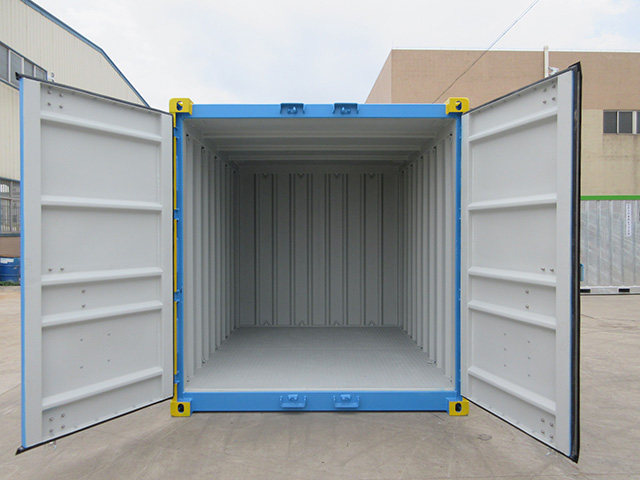
Offshore operations take place in some of the world’s most demanding working environments. From oil and gas platforms to offshore wind farms, marine construction projects, and subsea installations, transporting equipment safely between shore bases, supply vessels, and offshore facilities is essential.
This is where offshore shipping containers play a critical role.
Unlike ordinary shipping containers used for general freight, offshore containers are specially designed and certified for demanding marine lifting and transportation operations. They must withstand challenging conditions, including rough seas, repeated crane handling, corrosion exposure, and dynamic forces during offshore transfers.
But what are offshore shipping containers, how do they work, and why are they essential to offshore logistics?
In this comprehensive guide, we explore their construction, types, certification requirements, operational benefits, applications, and key considerations when selecting the right equipment.
What Are Offshore Shipping Containers?
Offshore shipping containers are specialized cargo-carrying units designed for transporting equipment, materials, supplies, and tools to and from offshore installations using marine vessels and offshore lifting equipment.
They are engineered for demanding maritime environments and are commonly designed and certified in accordance with standards such as DNV 2.7-1 (now represented by DNV-ST-E271) and EN 12079, depending on the intended application and contractual requirements.
Offshore shipping containers are widely used in:
- Offshore oil and gas exploration and production
- Offshore wind energy projects
- Subsea engineering and construction
- Marine maintenance and repair operations
- Offshore drilling and well intervention
- Offshore logistics and supply chain management
- Marine research and other specialized offshore activities
Their primary purpose is to enable safe and efficient cargo movement between onshore supply bases, offshore supply vessels, and offshore installations.
For example, an offshore drilling platform may require replacement pumps, valves, electrical equipment, and maintenance tools. A certified offshore container provides an engineered way to transport these items and lift them from a vessel onto the platform.
This makes offshore containers an important component of marine logistics, operational efficiency, and offshore safety.
How Do Offshore Shipping Containers Work?
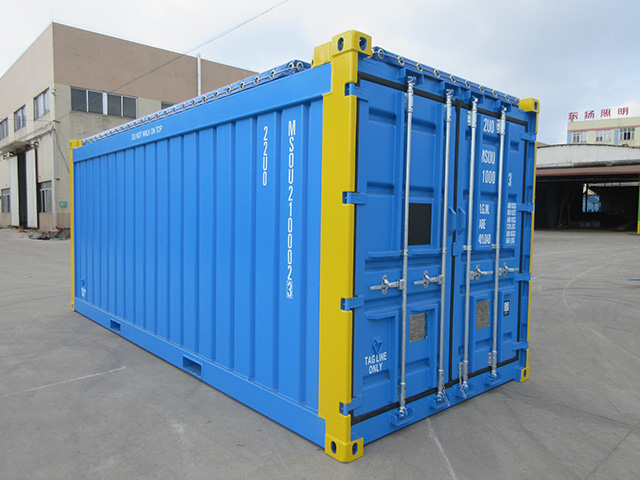
Offshore shipping containers function as robust transport and lifting units designed for the particular risks associated with offshore cargo handling.
In many offshore operations, cargo is moved through the following sequence:
Step 1: Loading at the onshore supply base
Materials, tools, or equipment are placed inside an appropriate offshore container. The cargo is secured in accordance with the container’s capacity, load-distribution limitations, and approved handling procedures.
Step 2: Transportation to the marine terminal
The loaded container is transported to a port or logistics facility where offshore supply vessels receive cargo.
Step 3: Loading onto an offshore supply vessel
The container is lifted or otherwise handled using equipment and procedures appropriate to its design, certification, and operational restrictions.
Step 4: Marine transportation
The vessel carries the container toward the offshore installation. Proper stowage and securing help prevent shifting or damage during transit.
Step 5: Offshore crane transfer
An offshore crane lifts the container from the supply vessel to the offshore facility using suitable certified lifting arrangements and approved lifting procedures.
Step 6: Unloading and return logistics
After delivery, the equipment is unloaded and the container can be reused for subsequent offshore movements, subject to condition, inspection, and suitability.
The offshore lift is particularly demanding because vessel movement, wind, sea conditions, and dynamic lifting forces must be considered.
This explains why ordinary freight containers are not automatically suitable for offshore lifting.
What Is the Difference Between Offshore Containers and Standard Shipping Containers?
One of the most frequently asked questions is whether ordinary ISO freight containers can be used in offshore operations.
Although both container categories transport cargo, they are designed around different operational requirements.
| Feature | Offshore shipping containers | Standard ISO shipping containers |
|---|---|---|
| Primary purpose | Offshore cargo transfers and marine operations | General freight transportation |
| Typical handling | Offshore crane lifts, vessel transfers, and marine handling | Port cranes, container terminals, ships, trucks, and trains |
| Applicable standards | Offshore container standards such as DNV-ST-E271 and EN 12079 | ISO container requirements and applicable CSC conventions |
| Structural design | Engineered for offshore lifting and dynamic handling | Engineered primarily for conventional freight transport and handling |
| Lifting arrangements | Purpose-designed offshore lifting sets and lifting points, as applicable | Standard corner fittings and conventional container-handling systems |
| Operating environment | Offshore marine environments and demanding transfers | General intermodal transport |
| Typical cargo | Offshore tools, equipment, supplies, components, and specialized loads | Consumer goods, industrial goods, machinery, and general freight |
Can a normal shipping container be used offshore?
A standard shipping container may be transported aboard a vessel or used for certain offshore purposes when permitted by the relevant operating requirements.
However, a conventional ISO container should not be assumed suitable for an offshore crane transfer simply because it is structurally strong or CSC-approved.
For a typical offshore lift between a vessel and an installation, the appropriate design, certification, lifting arrangements, inspection status, and operating procedures must be established.
A key takeaway for offshore operators is that container selection should be based on the intended lifting and transportation operation—not appearance, dimensions, or capacity alone.
What Are the Main Types of Offshore Shipping Containers?
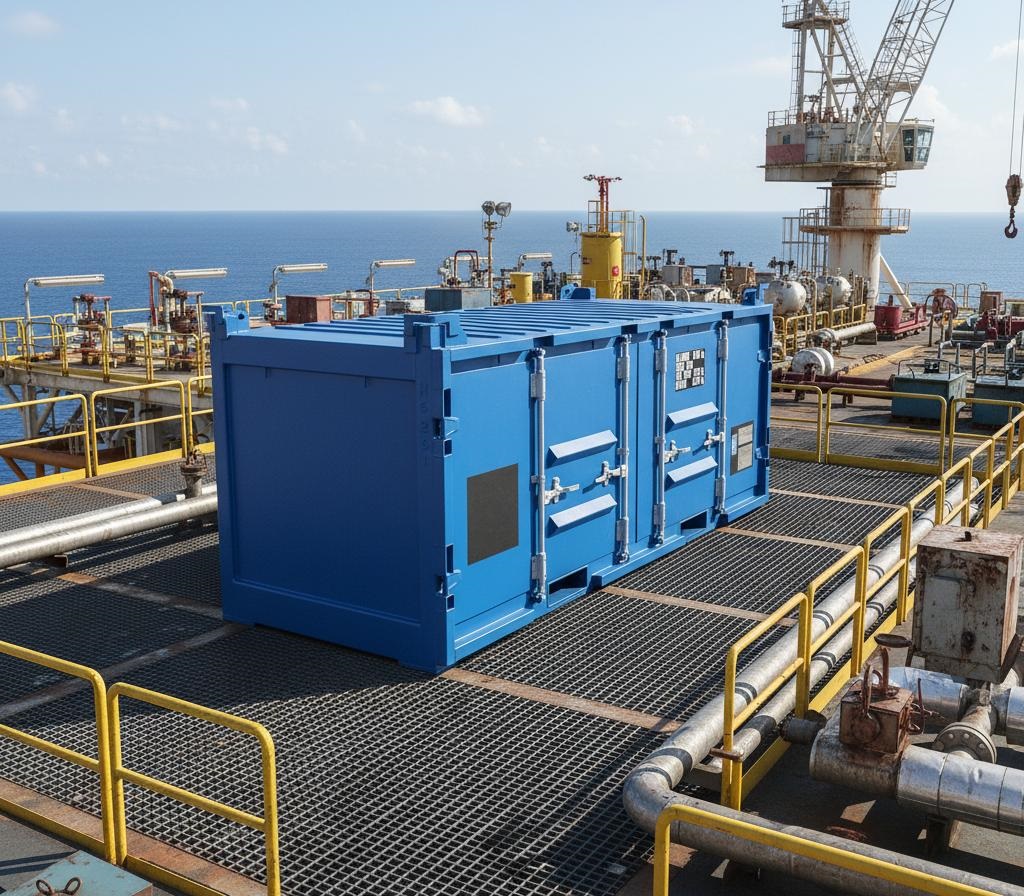
Offshore containers are available in different configurations to meet varying cargo and operational requirements.
Selecting the correct type can improve equipment protection, loading efficiency, and offshore handling.
1. Offshore Dry Cargo Containers
Offshore dry cargo containers are enclosed units used to transport tools, replacement parts, consumables, and general offshore supplies.
Common applications:
- Maintenance tools and spare parts
- Electrical and mechanical components
- Industrial consumables
- Packaged offshore equipment
- General operational supplies
Key benefits:
- Enclosed cargo protection
- Organized equipment transportation
- Reusable cargo storage
- Suitability for offshore lifting when properly designed and certified
Dry cargo units are commonly used for routine platform resupply and offshore maintenance campaigns.
2. Offshore Open-Top Containers
Open-top offshore containers provide greater loading flexibility for equipment that cannot be easily placed through conventional doors.
They are useful when cargo must be loaded vertically using suitable lifting equipment.
Typical cargo includes:
- Oversized mechanical equipment
- Industrial components
- Pumps and machinery
- Specialized maintenance equipment
- Awkwardly shaped cargo
Practical tip: Confirm cargo dimensions, lifting clearances, securing arrangements, and weight distribution before selecting an open-top configuration.
3. Offshore Baskets and Cargo Baskets
Offshore cargo baskets are commonly open-frame units designed to transport equipment, pipes, tools, and bulky materials.
Their configuration can make loading and unloading more convenient for specific cargo types.
Typical applications include:
- Pipes and tubular components
- Offshore maintenance materials
- Fabrication equipment
- Scaffolding components
- Tools and industrial supplies
Because some loads are long, heavy, or irregularly shaped, the basket’s dimensions, load rating, cargo restraints, and lifting arrangements must match the actual cargo.
4. Offshore Tank Containers
Offshore tank containers are designed for the transport of compatible liquids and, in certain specialized designs, other substances used in offshore operations.
Their intended contents and design determine which additional regulations, approvals, materials, and safety features apply.
Possible applications include:
- Drilling-related fluids
- Compatible industrial liquids
- Certain chemical products
- Other approved liquid cargo
Important: An offshore lifting certification alone does not establish that a tank is suitable for every liquid, hazardous substance, pressure condition, or transport route.
Always verify product compatibility, dangerous-goods requirements, tank approvals, and cleaning procedures.
5. Offshore Refrigerated or Temperature-Controlled Containers
Some offshore operations require temperature-controlled cargo transportation.
Specialized offshore containers may be configured to support refrigerated or temperature-sensitive materials.
Examples can include:
- Perishable provisions
- Temperature-sensitive supplies
- Specific industrial materials
- Medical or scientific cargo, where suitable equipment and approvals are in place
Selection considerations include the operating temperature range, power supply, temperature monitoring, marine suitability, and offshore lifting certification.
6. Offshore Waste Containers
Offshore waste containers are used to collect and transport waste materials from offshore installations to authorized handling facilities.
Depending on their design and intended contents, they may be suitable for particular categories of industrial or operational waste.
Potential benefits include:
- Improved waste segregation
- Organized collection and backloading
- Reduced loose-material handling
- More efficient waste logistics
Waste containers must be matched to the waste type, containment needs, contamination risks, and applicable waste-management and transportation regulations.
7. Specialized Offshore Equipment Containers
Certain offshore projects require customized containers for tools, workstations, instrumentation, or dedicated equipment packages.
Examples include:
- Offshore workshop containers
- Tool storage units
- Equipment modules
- Specialized instrumentation containers
- Offshore maintenance support units
Additional approvals may be necessary when a unit is used as an operational module rather than solely as a cargo-carrying container.
What Standards Apply to Offshore Shipping Containers?
Offshore container standards are central to the selection process because they establish technical requirements relating to structural integrity, manufacturing, testing, marking, and lifting safety.
The precise standards required depend on the container design, intended use, operating jurisdiction, contract specifications, and offshore operator requirements.
DNV 2.7-1 and DNV-ST-E271
DNV 2.7-1 is a widely recognized designation in offshore container procurement and certification.
Its successor designation, DNV-ST-E271, addresses offshore container requirements.
These requirements cover areas such as:
- Structural design and engineering
- Materials and fabrication
- Offshore lifting considerations
- Testing and inspection
- Marking and documentation
- Associated lifting arrangements
Buyers should verify the actual certification and applicable edition rather than relying solely on a marketing description stating that a container is “DNV approved.”
EN 12079
EN 12079 is an important European standard series relating to offshore containers and associated lifting sets.
It addresses relevant requirements for offshore container design, manufacturing, testing, marking, inspection, and lifting equipment.
A buyer may encounter references to EN 12079 alongside DNV offshore container standards.
These references should be checked against the particular equipment certificate and purchasing specification.
IMO Guidelines
The International Maritime Organization has also issued guidance relevant to offshore container approval and handling, including MSC/Circ.860.
These guidelines help provide context for offshore container safety requirements.
ISO and CSC Requirements
ISO and CSC requirements are important for conventional freight containers, but they serve a different primary purpose from offshore container design and certification.
A CSC safety approval plate should not be interpreted as equivalent to offshore lifting certification.
How to Verify Offshore Container Certification
Before purchasing, leasing, or operating an offshore container, request and review:
- The applicable offshore container certification documents.
- The container identification number and matching markings.
- The rated maximum gross mass, tare mass, and payload.
- Evidence of required manufacturing tests and inspections.
- Applicable lifting set certificates and identification.
- Current inspection and maintenance records.
- Documentation of repairs, modifications, or operating restrictions, where relevant.
Expert insight: Offshore container certification and ongoing fitness for use are related but separate considerations. A historically certified container may still require inspection, repair, or replacement of components before it can be used safely.
What Are the Main Benefits of Offshore Shipping Containers?
Offshore containers offer operational advantages that extend beyond cargo storage.
1. Enhanced Lifting and Handling Safety
Purpose-designed offshore containers support safer lifting operations by incorporating appropriate structural strength, lifting points, and certified lifting arrangements.
They are engineered for the particular handling conditions associated with offshore cargo transfers.
However, safe operations still depend on proper loading, inspection, rigging, crane capacity, weather assessment, and adherence to the lifting plan.
2. Better Equipment Protection
Marine environments can expose cargo to saltwater, humidity, vibration, and mechanical impacts.
Appropriately specified enclosed containers help protect sensitive equipment and reduce exposure during transportation and storage.
Additional protective packaging may still be necessary for delicate instruments, electronics, and moisture-sensitive materials.
3. Improved Offshore Logistics Efficiency
Using suitable reusable cargo units can simplify cargo consolidation, identification, and preparation.
For example, maintenance teams can prepare a container containing all necessary tools and replacement parts before a scheduled offshore shutdown.
This reduces fragmented cargo handling and supports more organized equipment delivery.
4. Reduced Risk of Cargo Damage and Delays
A properly selected container can reduce some handling-related risks.
Cargo securing and load distribution also help prevent internal movement during transportation.
The result may be fewer damage-related disruptions, rework activities, and replacement shipments.
These benefits depend on correct operational practices rather than container design alone.
5. Versatility Across Offshore Projects
Offshore container configurations can accommodate different cargo dimensions, materials, and equipment types.
Operators may use enclosed cargo containers for spare parts, baskets for tubular goods, or specially designed units for dedicated engineering equipment.
6. Support for Regulatory and Contractual Compliance
Documented compliance with applicable standards helps buyers demonstrate that the equipment meets specified engineering and inspection requirements.
This is particularly important when offshore operators, contractors, or project owners require particular certification schemes.
7. Potential Long-Term Cost Efficiency
Certified offshore containers may require a greater initial investment than ordinary freight containers.
Nevertheless, their suitability for repeated offshore operations can deliver economic benefits through reuse, standardized handling, and reduced operational disruptions.
The total cost should account for procurement or rental, maintenance, inspections, transportation, storage, repair, and eventual replacement.
Where Are Offshore Shipping Containers Used?
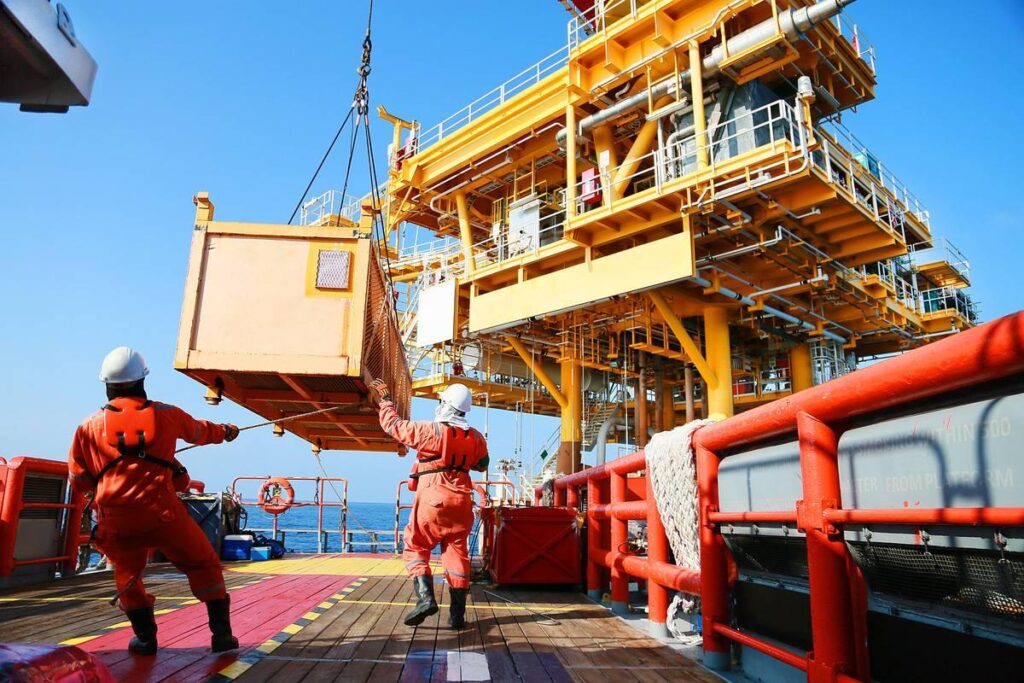
Offshore containers are used across a range of industrial and marine environments.
Offshore Oil and Gas Platforms
Oil and gas operations need ongoing deliveries of maintenance materials, pumps, valves, spare parts, and technical equipment.
Suitable offshore containers facilitate cargo transfer between supply vessels and offshore platforms.
For example, a drilling campaign may use certified baskets for tubular materials and enclosed containers for tools and spare parts.
Offshore Wind Farms
Wind energy projects often involve remote marine construction and maintenance activities.
Containers can transport electrical parts, service equipment, maintenance tools, and specialized components.
Their role is especially important when technicians and equipment must reach offshore installations through planned vessel operations.
Subsea Engineering Projects
Subsea work commonly requires specialized tools, handling equipment, and components.
Offshore baskets and other cargo units may be used to move project materials to support vessels or marine installations.
Marine Construction and Maintenance
Marine contractors can use offshore containers to transport construction equipment, replacement parts, consumables, and maintenance supplies.
Organized cargo units can help simplify material movements across different project stages.
Offshore Scientific and Research Operations
Marine research activities may require the transportation of specialized equipment and instruments to offshore locations.
Where the unit and operating environment are appropriate, offshore containers can support the movement and protection of scientific equipment.
How to Choose the Right Offshore Shipping Container
Choosing the right offshore container requires more than comparing external dimensions or purchase prices.
The following factors should guide the decision.
1. Identify the Cargo Requirements
Start by evaluating:
- Cargo type and purpose
- Dimensions and weight
- Center of gravity
- Required payload capacity
- Sensitivity to moisture and impact
- Hazardous-material classification, if applicable
- Loading and unloading requirements
For example, a long steel component may be better suited to a properly rated offshore basket, while delicate electronic equipment may require an enclosed unit with additional protective packaging.
2. Confirm the Required Certification
Determine which design and certification standards are required by the project owner, marine operator, jurisdiction, and lifting procedures.
Request certificates and verify the container’s identification and inspection history.
Do not assume that a container advertised as “heavy duty” is certified for offshore use.
3. Check Container Dimensions and Capacity
Review the container’s internal dimensions, external dimensions, door openings, rated payload, and maximum gross mass.
Also consider the capacities of the vessel, crane, deck, and transport equipment.
Remember that the mass of the lifting set and any lifting accessories may affect the overall lifting calculation.
4. Assess Material Quality and Corrosion Protection
Marine conditions can accelerate corrosion and deterioration.
Examine the container’s construction materials, coatings, welding quality, drainage arrangements, and overall condition.
For used containers, pay particular attention to corrosion around structural members and lifting points.
5. Inspect the Lifting Arrangement
Offshore lifting arrangements must be suitable for the particular container.
Check the lifting points, slings, shackles, identification, certificates, and any limitations specified by the manufacturer or competent inspection body.
Never substitute lifting components without confirming their suitability and the applicable approval requirements.
6. Evaluate New Versus Used Containers
New offshore containers may offer advantages such as known manufacturing history, project-specific design, and current documentation.
Used containers may offer lower acquisition costs, subject to availability and condition.
However, buyers should investigate previous repairs, structural damage, corrosion, certification records, and inspection status.
7. Consider Buying Versus Renting
The most economical option depends on the project duration and anticipated frequency of use.
Buying may be suitable when:
- Containers will be used repeatedly.
- Long-term fleet availability is important.
- Project-specific configurations are required.
- The organization can manage inspections, storage, and maintenance.
Renting may be suitable when:
- The requirement is temporary.
- Project demand fluctuates.
- Storage space is limited.
- The project does not justify a permanent container fleet.
Request the full commercial terms, including transportation, inspections, damage liability, off-hire provisions, and maintenance responsibilities.
What Should Buyers Check Before Ordering Offshore Containers?
The purchasing process should include technical verification and commercial due diligence.
A useful pre-purchase checklist includes:
- Confirmed container type and intended application
- Applicable offshore container standard
- Required certificates and inspection records
- Container dimensions, payload, and gross mass
- Suitable certified lifting set
- Cargo securing provisions
- Condition and corrosion assessment
- Delivery location and lead time
- Rental or purchase terms
- Maintenance and inspection responsibilities
- Manufacturer or supplier technical support
- Applicable project-specific requirements
Practical example:
Suppose a marine contractor needs a container to transport heavy mechanical parts to an offshore wind installation.
The procurement team should not begin by selecting the cheapest available 10-foot container.
Instead, it should first determine the weight of the equipment, cargo dimensions, offshore crane lifting restrictions, vessel deck capacity, certification requirements, and loading arrangements.
Only then should it compare technically suitable equipment.
This process reduces the risk of ordering a container that cannot be accepted for the planned operation.
Common Offshore Container Problems and How to Avoid Them
Problem 1: Selecting the Wrong Container Type
A container may have enough volume but inadequate payload capacity, loading access, or cargo support.
Solution: Evaluate cargo dimensions, weight, securing requirements, and handling methods before placing an order.
Problem 2: Missing or Incomplete Certification
Documentation problems can delay mobilization or prevent acceptance by the offshore operator.
Solution: Request and review the applicable certificates before dispatch, and ensure identification numbers match the physical equipment.
Problem 3: Corrosion and Structural Deterioration
Repeated exposure to marine conditions can affect coatings, structural components, and lifting arrangements.
Solution: Establish condition inspections, maintenance controls, repair procedures, and documented assessments by competent personnel.
Problem 4: Incorrect Weight Distribution
Poorly distributed cargo can create handling difficulties and excessive localized loads.
Solution: Follow manufacturer loading instructions, respect payload and floor-loading limits, and secure cargo appropriately.
Problem 5: Inappropriate Lifting Equipment
Using unapproved, damaged, or incorrectly configured lifting equipment increases operational risk.
Solution: Verify that the lifting set is appropriate for the container and that all applicable inspection, rating, and operational requirements are met.
Problem 6: Unexpected Logistics Costs
The purchase or rental price is only one component of offshore container expenditure.
Solution: Calculate the total cost of ownership or hire, including transport, storage, inspections, maintenance, and return logistics.
How Long Do Offshore Shipping Containers Last?
The service life of an offshore container depends on construction quality, operating frequency, handling conditions, corrosion exposure, maintenance, repairs, and inspection findings.
There is no single universal lifespan that can be guaranteed for every offshore container.
A container exposed to harsh marine conditions and frequent crane transfers may deteriorate differently from an equivalent unit used less frequently.
To support serviceability:
- Follow the applicable inspection and examination regime.
- Inspect structural components and lifting arrangements for deterioration.
- Address corrosion and coating damage promptly.
- Keep maintenance and repair records.
- Use qualified personnel for assessments and repairs.
- Remove equipment from service when damage or deficiencies compromise safe use.
An offshore container should remain in service only while it continues to satisfy the applicable technical and operational requirements.
How Much Do Offshore Shipping Containers Cost?
Offshore container pricing varies significantly with technical specifications, certification, construction, customization, geographic location, and market conditions.
Key pricing factors include:
- Container type and dimensions
- Payload and structural requirements
- New or used condition
- Certification and testing
- Lifting equipment supplied
- Materials and corrosion protection
- Customized fittings or accessories
- Quantity ordered
- Transportation and delivery requirements
An offshore basket, enclosed cargo container, tank container, and specialized offshore module cannot be compared reliably using one general price.
Expert purchasing advice: Request itemized quotations that identify the equipment specification, certification, lifting set, delivery terms, and excluded costs.
This makes supplier comparisons more meaningful and helps prevent unexpected project expenditure.
Are Offshore Shipping Containers Environmentally Friendly?
Intermodal Equipment Offshore containers can support more resource-efficient logistics through repeated use, organized cargo consolidation, maintenance, and repair.
For example, using suitable reusable equipment may reduce the need for disposable packaging or improvised cargo-handling solutions.
However, the environmental impact depends on the container’s materials, manufacturing processes, transport distances, service life, maintenance, and end-of-life management.
Operators seeking improved environmental performance should prioritize durable equipment, responsible maintenance, efficient transport planning, and appropriate reuse or recycling.
Frequently Asked Questions About Offshore Shipping Containers
1. What are offshore shipping containers used for?
Offshore shipping containers are used to transport equipment, tools, supplies, spare parts, and other approved cargo between onshore locations, marine vessels, and offshore installations. They are particularly valuable for offshore oil and gas, offshore wind, subsea engineering, and marine construction.
2. What is an offshore container?
An offshore container is a specialized transport unit designed for use in offshore operations, often involving lifting between marine vessels and offshore installations. Appropriate certification and lifting arrangements are central considerations.
3. What is the difference between an offshore container and an ISO container?
An offshore container is engineered for specified offshore handling and lifting conditions, whereas a conventional ISO container is primarily designed for general freight transport. Their structural requirements, certifications, and typical lifting arrangements differ.
4. Are offshore containers DNV certified?
Many offshore containers are designed and certified to applicable DNV offshore container requirements. However, not every container is necessarily DNV certified. Buyers should verify the actual certificate, applicable standard, and inspection status for each unit.
5. What is DNV 2.7-1?
DNV 2.7-1 is a well-established offshore container standard designation that has been succeeded by DNV-ST-E271. It relates to the engineering, manufacture, testing, and certification of offshore containers.
6. What is EN 12079?
EN 12079 is a European standard series covering offshore containers and associated lifting sets, including relevant design, testing, marking, inspection, and technical requirements.
7. Can offshore containers be used for oil and gas operations?
Yes. Offshore containers are commonly used to move tools, spare parts, maintenance equipment, industrial supplies, and suitable specialized cargo to and from offshore oil and gas facilities.
8. Can offshore containers be used for offshore wind farms?
Yes. Offshore wind construction and maintenance activities use suitable cargo-carrying units for transporting tools, equipment, consumables, and specialized components.
9. Can a regular shipping container be used on an offshore platform?
A regular shipping container may be used in certain circumstances, subject to the installation’s rules and operating requirements. However, a conventional freight container is not automatically suitable for offshore crane lifting and should not be treated as certified for that purpose without appropriate engineering verification and approvals.
10. What sizes do offshore shipping containers come in?
Offshore containers are manufactured in various sizes and configurations. Dimensions depend on the manufacturer, container type, payload requirements, and project specifications. Buyers should request precise internal and external measurements.
11. What are offshore cargo baskets?
Offshore cargo baskets are purpose-designed cargo-carrying units, typically featuring an open configuration, used for suitable equipment, pipes, materials, and other offshore cargo.
12. How are offshore shipping containers lifted?
Offshore containers are lifted using appropriate offshore cranes and suitable lifting arrangements, subject to approved procedures, inspection requirements, weight limitations, and environmental operating conditions.
13. How often should offshore containers be inspected?
Inspection and examination schedules depend on the applicable standards, certification regime, project requirements, operating conditions, and relevant regulatory obligations. Operators should follow the required regime and arrange additional assessments when damage or abnormal conditions occur.
14. Are offshore shipping containers waterproof?
Enclosed offshore containers may provide weather protection, but watertightness should never be assumed for every design. Buyers should verify sealing performance, intended exposure conditions, and the protection needed for sensitive cargo.
15. Can offshore shipping containers carry hazardous materials?
Some specialized offshore containers can transport approved hazardous cargo when the relevant design, packaging, containment, dangerous-goods, transportation, and operational requirements are satisfied. Offshore container certification alone does not authorize every hazardous material.
16. Is it better to buy or rent an offshore container?
Purchasing may be cost-effective for long-term and frequent use, while renting can provide flexibility for temporary projects. The best choice depends on utilization, availability, logistics costs, contract terms, and maintenance responsibilities.
17. How do I find a reliable offshore container supplier?
Look for a supplier that can provide appropriate technical documentation, transparent equipment specifications, certification details, inspection records, and clear delivery or rental terms. Request evidence of suitability for the intended offshore operation.
18. What information should I provide when requesting a quotation?
Provide the required container type, intended cargo, dimensions, weight, quantity, applicable certification, destination, delivery schedule, and whether you prefer purchase or rental.
Why Offshore Shipping Containers Matter
Offshore shipping containers are essential components of safe and organized marine logistics.
Their specialized engineering, lifting arrangements, and certification requirements distinguish them from ordinary freight containers and make them suitable for demanding offshore cargo transfers when properly selected and maintained.
For offshore oil and gas operators, wind energy contractors, subsea service providers, and marine logistics companies, the right container can improve cargo handling, support equipment protection, and reduce preventable disruptions.
The most important purchasing decision is not simply which container is available at the lowest price. It is determining which equipment is technically suitable, appropriately certified, properly documented, and fit for the intended operation.
Looking for Offshore Shipping Container Solutions?
Whether your project requires offshore cargo containers, specialized cargo-carrying units, or guidance on equipment specifications, begin by defining your technical and operational requirements.
Visit Equip Intermodal to explore the company’s available information and use its published contact options to inquire about relevant equipment, specifications, availability, and applicable certification.
Before making a purchase or rental decision, confirm that the proposed equipment and documentation meet your project requirements.
